We Need New Ways to Remember
Every generation believes it is living in the most technologically advanced moment in history. And in many ways, we are. We can speak across continents instantly. We can access nearly all of human knowledge from a device that fits in our pocket. Artificial intelligence can now generate images, music, and even conversation.
And yet, when it comes to remembering the people we love most, our tools are strangely primitive.
For thousands of years, the primary technologies of memory have remained remarkably unchanged. We write things down. We save photographs. We record videos. Occasionally, we build monuments or name buildings after people who mattered.
But these systems have a fatal flaw.
They are silent.
A photo cannot answer a question.
A journal cannot tell a new story.
A video cannot respond when your child asks, “What was Grandpa like when he was my age?”
The most meaningful memories in our lives are not static artifacts. They are living exchanges. They happen in conversation. They unfold in stories told across dinner tables, on long car rides, or during quiet moments when someone finally decides to share something real.
But when someone passes away, that conversation ends.
Or at least, it always has.
The Disappearing Library of Human Experience
Humanity has spent centuries preserving the words of famous people.
Libraries hold the speeches of presidents. Archives preserve the letters of writers and philosophers. Entire academic fields exist to study the thoughts of a relatively small group of historical figures.
But the stories that shape our lives most deeply rarely belong to famous people.
They belong to parents.
Grandparents.
Neighbors.
Friends.
They are the stories of childhoods that unfolded decades before we were born. The stories of first loves, early failures, lucky breaks, and quiet acts of courage that never made the news but shaped entire families.
These stories are not preserved in libraries.
Most of them disappear within a generation.
Every day, millions of lifetimes of wisdom, humor, perspective, and memory vanish simply because we have never built systems designed to keep them.
It is one of the greatest cultural losses happening in plain sight.
Our Memory Technology Is Outdated
The way we currently preserve personal history was designed for a world that no longer exists.
Photo albums were created for an era when photography was rare. Journals were designed for solitary reflection, not shared storytelling. Video recordings capture moments, but they cannot capture perspective.
What these tools miss is interaction.
Memory is not just about recording what happened. It is about asking questions. It is about curiosity. It is about discovering new layers of a person’s life long after the moment has passed.
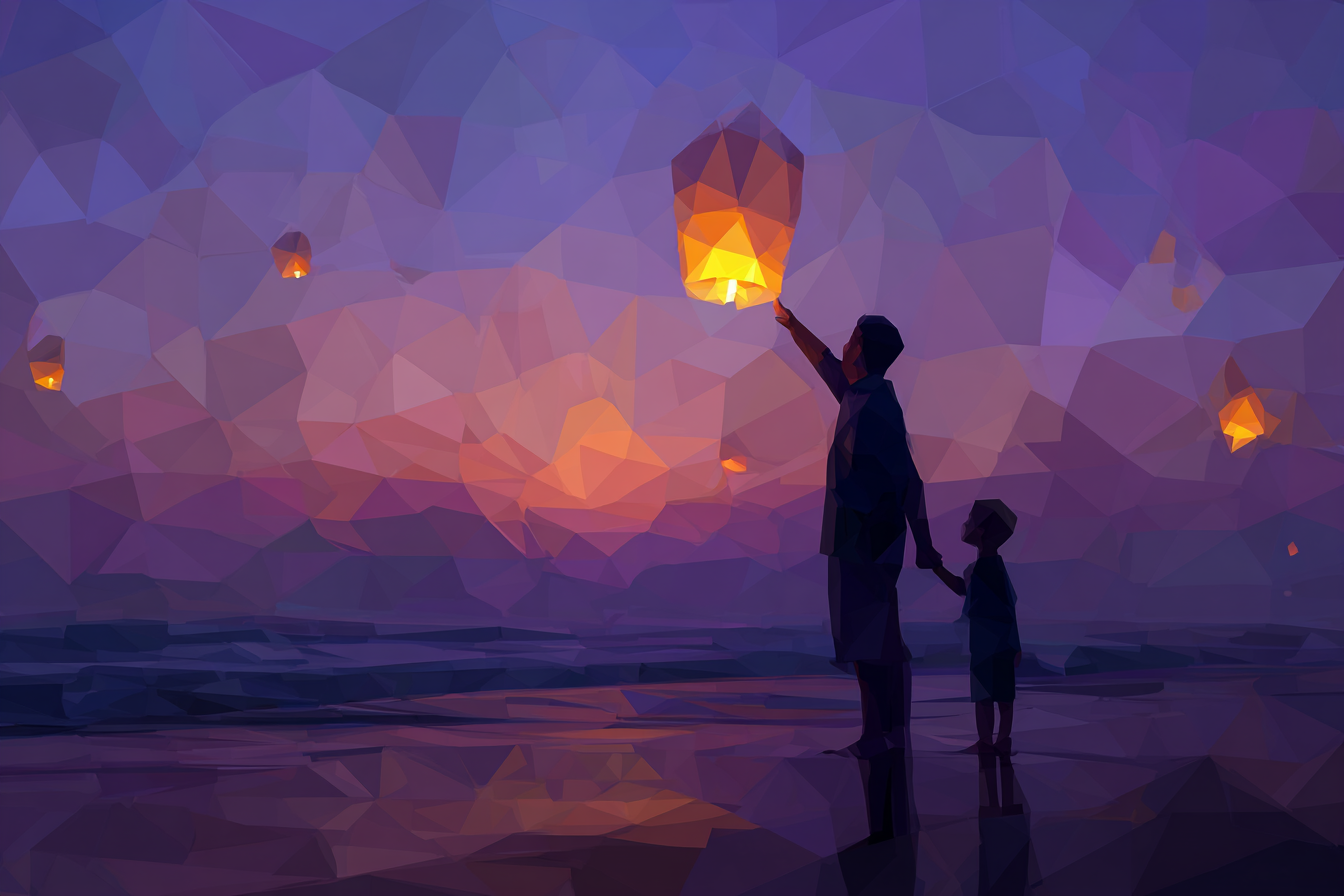
Imagine being able to ask your grandfather about the day he met your grandmother.
Or asking your mother what she was most afraid of when she was twenty.
Or asking a parent, years from now, what they hoped for you when you were a child.
These are not questions for a photo album.
They are questions for a conversation.
The Next Evolution of Memory
We are entering a moment where technology finally allows us to rethink how human stories are preserved.
Artificial intelligence is often framed around productivity or automation. But one of its most meaningful possibilities lies somewhere else entirely.
It can help preserve people.
Not just their images or voices, but their perspective.
Their humor.
Their worldview.
The way they explain things.
The way they remember.
For the first time in history, it is possible to create systems that allow stories to remain interactive. Systems where families can continue asking questions, exploring memories, and discovering the lives of the people who shaped them.
Not as static recordings.
But as living narratives.
Remembering Is a Human Need
The desire to remember is not sentimental. It is fundamental to being human.
Stories are how families pass down values. They are how children understand where they came from. They are how people find meaning in the experiences that shaped them.
Without those stories, something quietly disappears.
Not just information.
Identity.
Every family carries a unique history that cannot be reconstructed once it is gone. Every person holds a collection of experiences that will never exist again once they are lost.
And yet, until recently, we had no tools capable of preserving them properly.
A Cultural Shift Is Coming
In the coming decades, the way we remember people will change dramatically.
Just as photography once transformed memory by allowing moments to be captured visually, new technologies will transform memory again by allowing stories to remain accessible and interactive.
Instead of leaving behind silent artifacts, people will leave behind living narratives.
Instead of stories fading with time, families will be able to explore them for generations.
Instead of losing the voices that shaped us, we will be able to keep learning from them.
This is not about replacing human relationships.
It is about honoring them.
The Stories Worth Saving
History will always preserve the words of presidents and philosophers.
But the stories that truly matter to most of us are closer to home.
The way your father explained the world.
The way your grandmother told stories about growing up.
The way your mother laughed when she remembered something from childhood.
These are the stories that shape who we become.
They deserve better systems for remembering.
And for the first time in human history, we finally have the opportunity to build them.
At Reflekta, we believe memory should not be reduced to files stored on a hard drive.
It should remain something families can return to.
Ask questions of.
Learn from.
And continue discovering for generations.
Because the people who shaped our lives should never be reduced to silence.
And the stories that made us who we are deserve a future.